

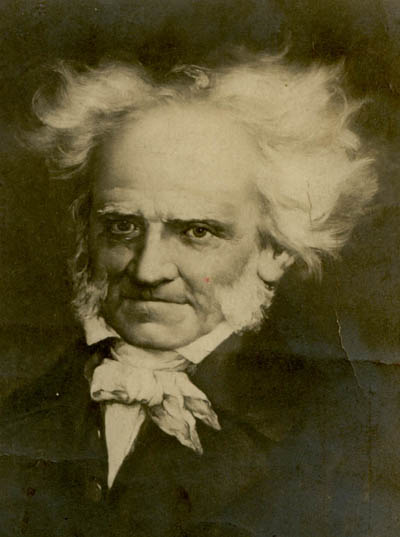
 Arthur Schopenhauer delar in människorna i två kategorier i Studies in Pessimism, beroende på inställningen till livet:
According as a man’s mental energy is exerted or relaxed, will life appear to him either so short, and petty, and fleeting, that nothing can possibly happen over which it is worth his while to spend emotion; that nothing really matters, whether it is pleasure or riches, or even fame, and that in whatever way a man may have failed, he cannot have lost much—or, on the other hand, life will seem so long, so important, so all in all, so momentous and so full of difficulty that we have to plunge into it with our whole soul if we are to obtain a share of its goods, make sure of its prizes, and carry out our plans.
This latter is the immanent and common view of life; it is what Gracian means when he speaks of the serious way of looking at things—tomar muy de veras el vivir. The former is the transcendental view, which is well expressed in Ovid’s non est tanti—it is not worth so much trouble; still better, however, by Plato’s remark that nothing in human affairs is worth any great anxiety—[Greek: oute ti ton anthropinon axion esti megalaes spoudaes.]
This condition of mind is due to the intellect having got the upper hand in the domain of consciousness, where, freed from the mere service of the will, it looks upon the phenomena of life objectively, and so cannot fail to gain a clear insight into its vain and futile character. But in the other condition of mind, will predominates; and the intellect exists only to light it on its way to the attainment of its desires.
A man is great or small according as he leans to the one or the other of these views of life.
En stor människa inser att vi flyter och att det gäller att flyta med — en mycket viktig insikt förmedlad av Gombrowicz. Jag vill vara stor men har många små-lika drag. Jag vill flyta, och tänka att livet handlar om att flyta, i ökad utsträckning.
 Nonicoclolasos
Du måste vara inloggad för att kunna skicka en kommentar.